How a Car Engine Works: Basics for Every Driver
Understanding how a car engine works can seem daunting, but the fundamental principles are accessible to any driver. At its core, an internal combustion engine converts the energy stored in fuel into mechanical motion that propels the vehicle. This process relies on a series of controlled explosions and precisely timed movements of internal components. Gaining a basic grasp of these operations offers practical benefits, such as improved communication with mechanics and a better ability to recognize early signs of trouble.
For many, the engine remains a mysterious black box—something to be maintained by professionals and otherwise ignored. However, a foundational knowledge of the four-stroke cycle and the roles of key parts like pistons and valves can demystify much of what happens under the hood. This article provides a clear, non-technical explanation of these concepts. It is intended for educational purposes and does not replace professional inspection or repair.
The Four-Stroke Cycle: An Overview
Most gasoline engines in modern vehicles operate on a four-stroke cycle, a sequence of events that repeats thousands of times per minute. Each stroke refers to a complete movement of the piston within the cylinder, either downward or upward. The cycle consists of four distinct phases: intake, compression, power, and exhaust. These phases are timed by the rotation of the crankshaft and the opening and closing of valves. Understanding each stroke helps clarify how fuel and air become motion.
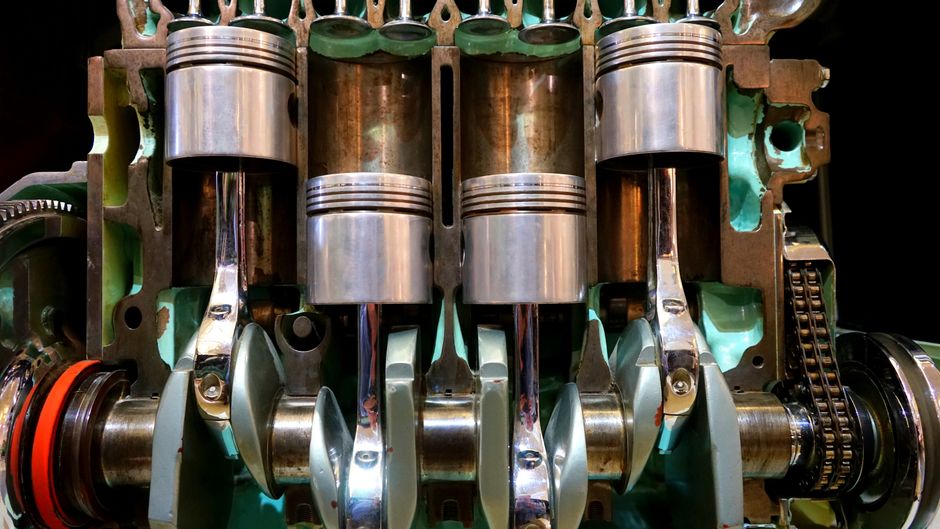
During the intake stroke, the piston moves downward, creating a vacuum that draws a mixture of air and fuel into the cylinder through open intake valves. In the compression stroke, the piston moves upward with both valves closed, compressing the mixture. This compression increases the mixture’s potential energy and prepares it for ignition. The power stroke begins when the spark plug ignites the compressed mixture, causing a rapid expansion of gases that forces the piston downward. Finally, in the exhaust stroke, the piston moves upward again, pushing spent gases out through the open exhaust valve. This cycle then repeats, with each cylinder firing in a specific order to provide smooth power delivery.
Each stroke is precisely timed to convert chemical energy into mechanical work, a process that relies on the coordinated movement of multiple components.
Key Components: Pistons, Valves, and More
The piston is a cylindrical component that moves up and down within the engine cylinder. It serves as the moving boundary that contains the combustion gases and transmits force to the crankshaft via the connecting rod. Pistons are typically made of aluminum alloys for strength and lightness, and they feature rings that seal the combustion chamber and manage oil control. The crankshaft converts the linear motion of the pistons into rotational motion, which ultimately drives the vehicle’s wheels through the transmission.
Valves are essential for controlling the flow of gases into and out of the cylinder. Intake valves allow the air-fuel mixture to enter, while exhaust valves let burned gases exit. These valves are opened and closed by the camshaft, which synchronizes their movement with the piston’s position. In many modern engines, variable valve timing adjusts the opening and closing points to optimize performance and efficiency under different conditions. Other important components include the spark plug, which provides the ignition source, and the fuel injectors, which deliver fuel in precise amounts.
- Piston: Moves within the cylinder to compress the mixture and transmit force.
- Valves: Regulate gas exchange, ensuring the cylinder receives fresh mixture and expels exhaust.
- Crankshaft: Converts reciprocating motion into rotation.
- Camshaft: Controls valve timing.
- Spark plug: Initiates combustion in gasoline engines.
- Fuel injector: Delivers fuel in measured quantities.
These components work together within a complex system that includes lubrication, cooling, and electronic controls. The engine control unit (ECU) monitors various sensors and adjusts parameters such as fuel injection and ignition timing to maintain optimal operation. While the exact design varies among manufacturers, the fundamental principles remain consistent across most internal combustion engines.
Why Understanding the Engine Aids Basic Diagnostics
Having a working knowledge of engine operation can help drivers interpret common symptoms and communicate more effectively with technicians. For instance, if a vehicle exhibits reduced power or misfires, understanding the four-stroke cycle can provide context for potential causes, such as issues with ignition, fuel delivery, or compression. This does not mean a driver should attempt repairs beyond their skill level; rather, it enables more informed discussions and timely attention to problems.
Basic diagnostic tools like the onboard diagnostic system (OBD-II) can provide trouble codes that point to specific systems. Knowing that a misfire code might relate to ignition or fuel components can help a driver describe symptoms accurately. Similarly, unusual noises such as knocking or ticking may be associated with valve train or piston issues. While these insights are valuable, they are not a substitute for professional evaluation. Many factors influence engine behavior, and only a qualified mechanic can perform a thorough diagnosis.
Furthermore, understanding the engine can encourage better maintenance habits. Recognizing the importance of oil changes, coolant levels, and air filter cleanliness can contribute to longevity. However, it is important to note that no maintenance schedule guarantees a specific outcome; results depend on driving conditions, usage patterns, and other variables.
Common Misconceptions and Practical Considerations
One common misconception is that the engine operates in a simple, linear fashion. In reality, it is a highly coordinated system where timing and precision are critical. Another misconception is that all engines are alike; differences exist between gasoline and diesel engines, as well as among various designs such as inline, V-type, and flat configurations. Each has its own characteristics, but the four-stroke principle applies broadly to most automotive engines.
Drivers may also wonder about the role of engine size and power. Displacement, often measured in liters, indicates the total volume of all cylinders. Generally, larger displacement can allow more fuel and air to be combusted, potentially producing more power, but this is influenced by many factors including forced induction, fuel management, and engine design. It is not a direct guarantee of performance.
From a practical standpoint, being aware of how the engine works can help drivers avoid actions that might cause harm, such as ignoring warning lights or neglecting fluid checks. It can also foster a greater appreciation for the engineering involved. However, any specific concern should be addressed by a professional. The information here is intended to provide general awareness, not to serve as a repair guide.
Integrating Knowledge into Ownership Experience
For those interested in learning more, resources such as automotive courses, manuals, and reputable online platforms can offer deeper insights. Auto Insight provides educational content that explains automotive systems in accessible terms, supporting drivers in their quest for understanding. This type of learning can enhance the ownership experience by making vehicle maintenance and repair conversations more productive.
Ultimately, the goal is to empower drivers with knowledge that supports informed decision-making. Whether it’s recognizing when to schedule service or simply appreciating the technology that powers daily commutes, a basic understanding of the car engine is a valuable asset. It bridges the gap between driver and machine, fostering a sense of confidence and responsibility.